IDEAS. CONTENT. CONNECTIONS.VIDEO · WEB · DIGITAL
th!nkCREATIVE MEDIA WORKS
02 / Web design & development

A better website starts with the visitor.

Business websites and content management systems built around clear journeys, maintainable content and measurable progress.

What goes into the work

  • Audience journeys and information architecture
  • Responsive page and component designs
  • CMS content models and editorial workflows
  • Performance and accessibility checks
  • Launch, measurement and publishing plans

The approach

Map the visitor’s task before drawing the page. Define reusable content, prototype the critical journey, then check performance and accessibility on real devices. Give editors a publishing workflow they can maintain.

A WORKING EXAMPLE

See the approach take shape.

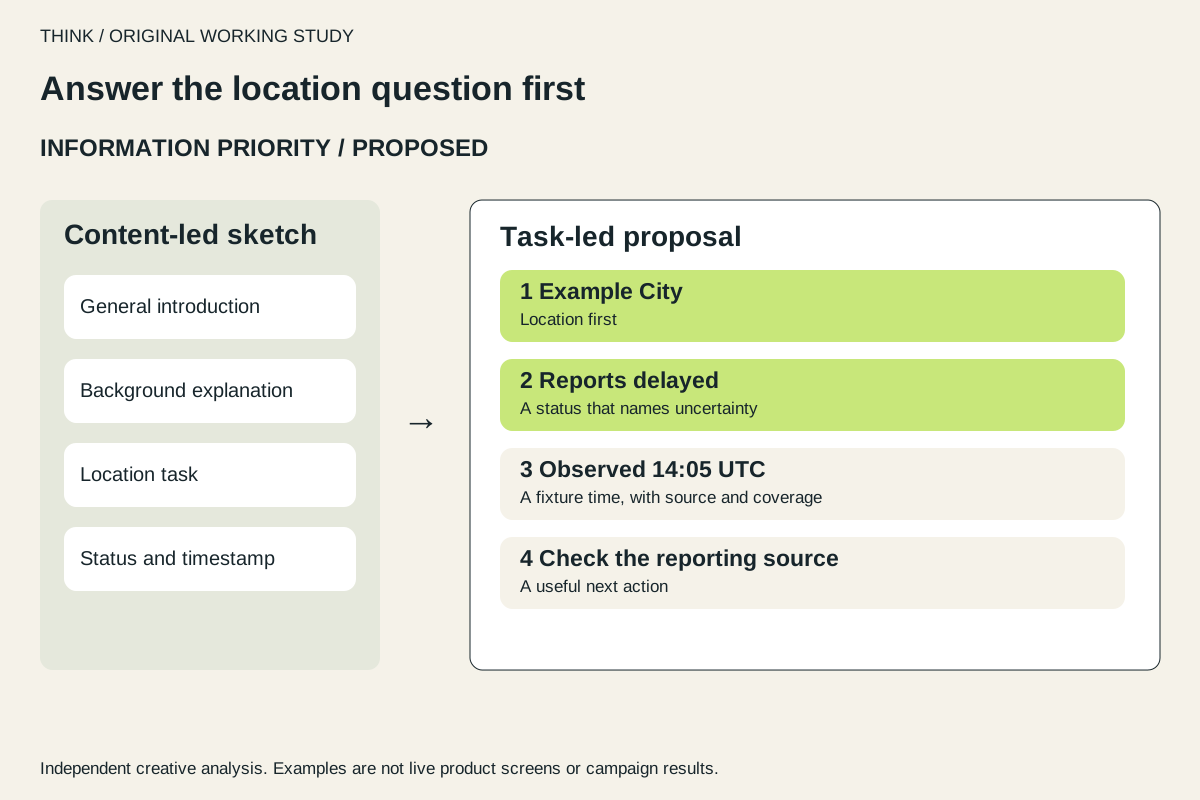
The wireframe compares two invented hierarchies, not a before-and-after audit of the current site. The task-led proposal puts location and status ahead of explanation. Below it, a keyboard-operable prototype demonstrates recent, stale and missing observations using fixed fictional data.

Explore the diagram and working files →
An original wireframe compares a generic content-led stack with a proposed hierarchy of location, uncertain status, observation time and reporting source.
SEE THE THINKING

Web design & development case studies

Web Design & DevelopmentDocumented case study

Figma: give the marketing team useful page-building blocks

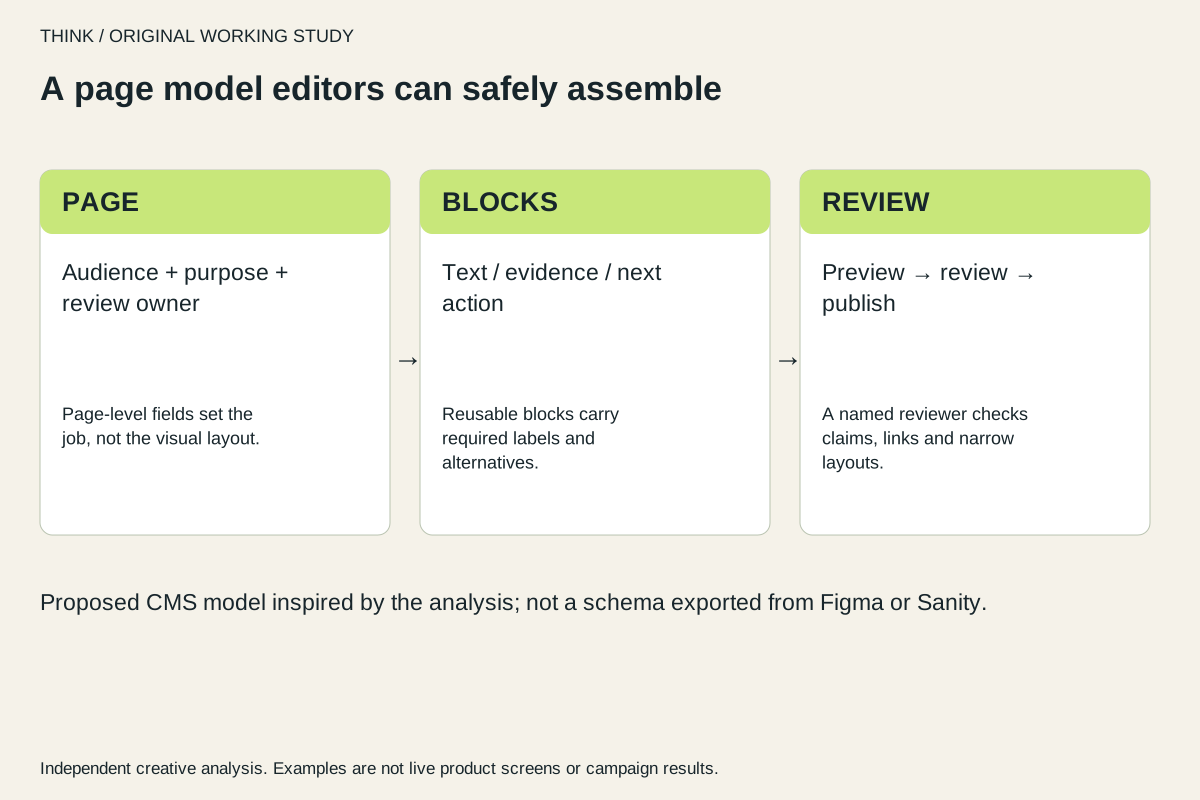
Corey Ward’s account of Figma’s Gatsby and Sanity marketing site describes a page builder that gave editors room to assemble campaign pages, alongside forms, localized content, and a searchable blog. The case points to a practical design challenge: let marketers make meaningful page choices while keeping structure, accessibility, and publishing behavior governed by a component system. A proposed product-section block and launch-page acceptance task show how to turn that balance into an editorial workflow.

Original diagram + working filesRead the case study
Web Design & DevelopmentDocumented case study

Renault: use field data to choose the website work

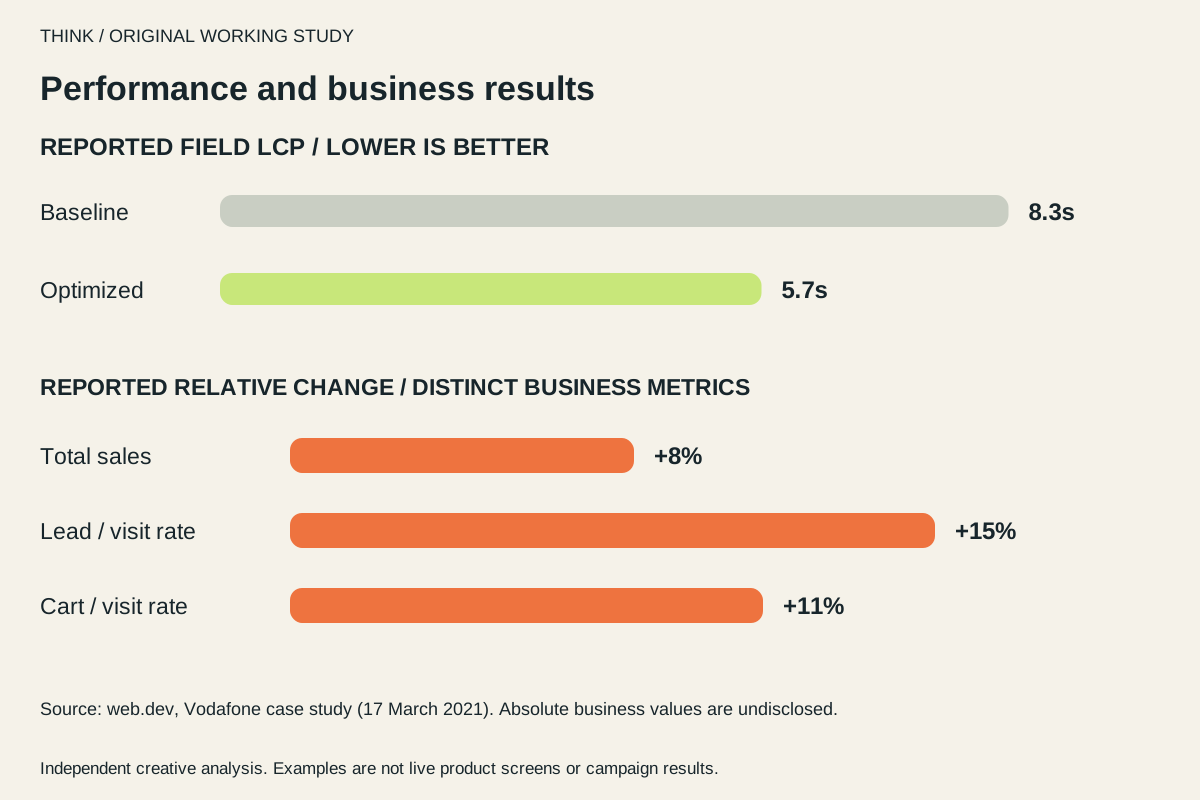
Renault and fifty-five connected real-user performance measurements with analytics to examine how landing-page speed related to engagement across markets. The case shows how a large observational dataset can guide where to investigate, while a disciplined follow-up experiment is needed before claiming that a speed change caused more leads.

Read the case study